Grading and drainage for mountain properties
Water is the most common reason a landscape fails in the Roaring Fork Valley. We grade sites and build drainage systems that move snowmelt and runoff away from foundations, walls and patios and keep them there.
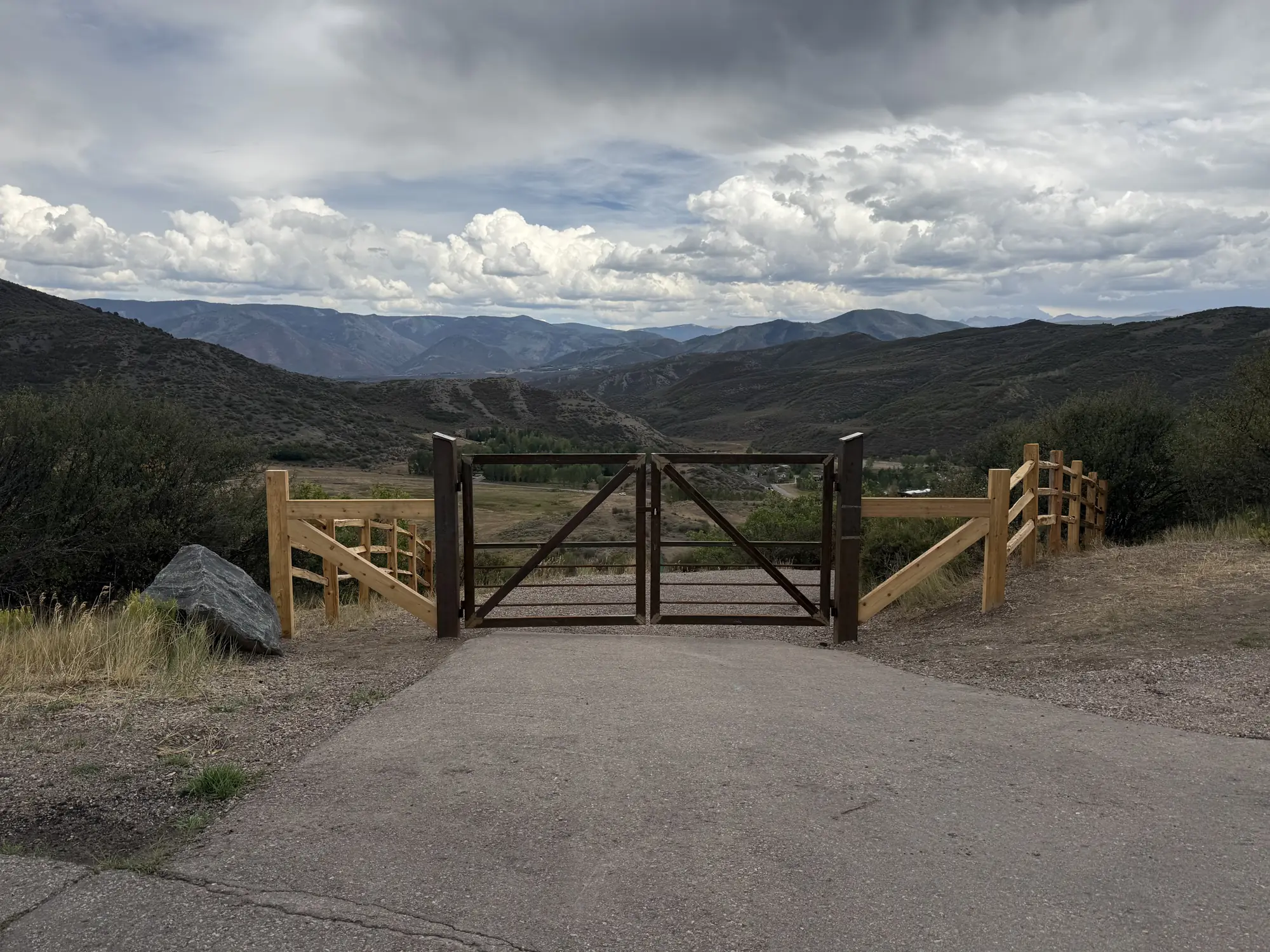
Every property in this valley deals with water twice a year in volume: spring snowmelt and summer storms. Add roof snow shedding onto beds, irrigation on slopes and soils that range from river cobble to tight clay, and drainage becomes a construction problem rather than a landscaping detail.
Ridgeline designs the grades and builds the drainage as part of the site, not as a fix after the fact. We claim every drainage scope on a project, connections included, so there is never a downspout or sump line waiting for someone else to tie it in.
Homeowners with water problems
Wet basements, pooling patios, eroding slopes and ice at the door are usually grading and drainage problems. We diagnose and correct them.
Builders and architects
Finish grading and drainage that match the civil and landscape drawings, with tie-ins completed before planting and hardscape close them off.
What's included.
Grading
- Finish grading to plan elevations
- Positive drainage away from structures
- Swales and surface drainage
- Slope shaping and terracing
- Topsoil placement
Subsurface drainage
- French drains
- Area drains and catch basins
- Dry wells
- Downspout tie-ins and sump discharge lines
- Perforated drain lines behind retaining walls
Conveyance and outlets
- Culverts
- Daylight outlets and rip-rap
- Erosion control on slopes
How we scope it
Drainage is the scope most often left off a plan set. Our default is the opposite:
- We make the downspout and sump connections ourselves rather than waiting on a plumber.
- Drainage behind every retaining wall we build is part of the wall, not an option.
- Where a plan is silent on drainage, we say so in the estimate and propose a solution.
Mountain conditions, accounted for.
Snowmelt
Melt comes off roofs, driveways and slopes in volume over a few weeks. Grades and outlets have to handle that peak, not an average rainfall.
Freeze-thaw
Water that sits against a foundation or under a patio freezes and lifts. Positive grade and free-draining base are the defense.
Soils
Valley-floor cobble drains fast; mesa-top and hillside clays do not. The right system depends on what the site is made of.
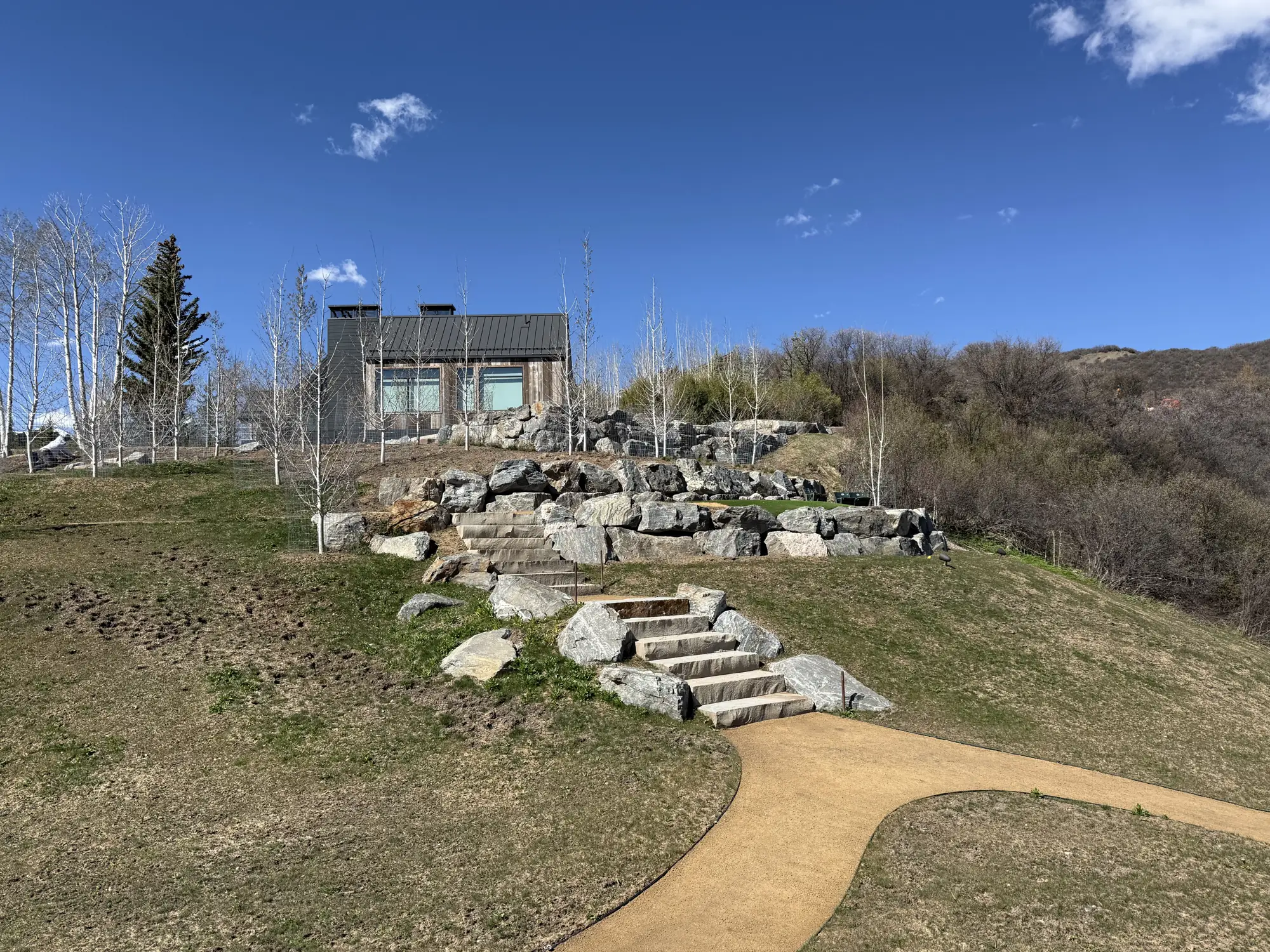
Grading & Drainage FAQ.
My basement gets wet every spring. Can you fix it?
Often, yes. Most spring water problems come from grade sloping toward the house, downspouts discharging at the foundation, or missing subsurface drainage. We look at the site, find where the water is coming from, and correct it.
What is a dry well?
A buried, gravel-filled or chambered structure that collects runoff from drains and lets it infiltrate into the soil where there is no place to daylight a pipe. We install them where soils and setbacks allow.
Do you handle drainage on new construction?
Yes. We build finish grades and drainage to the civil and landscape drawings and complete downspout and sump tie-ins before hardscape and planting close them off.
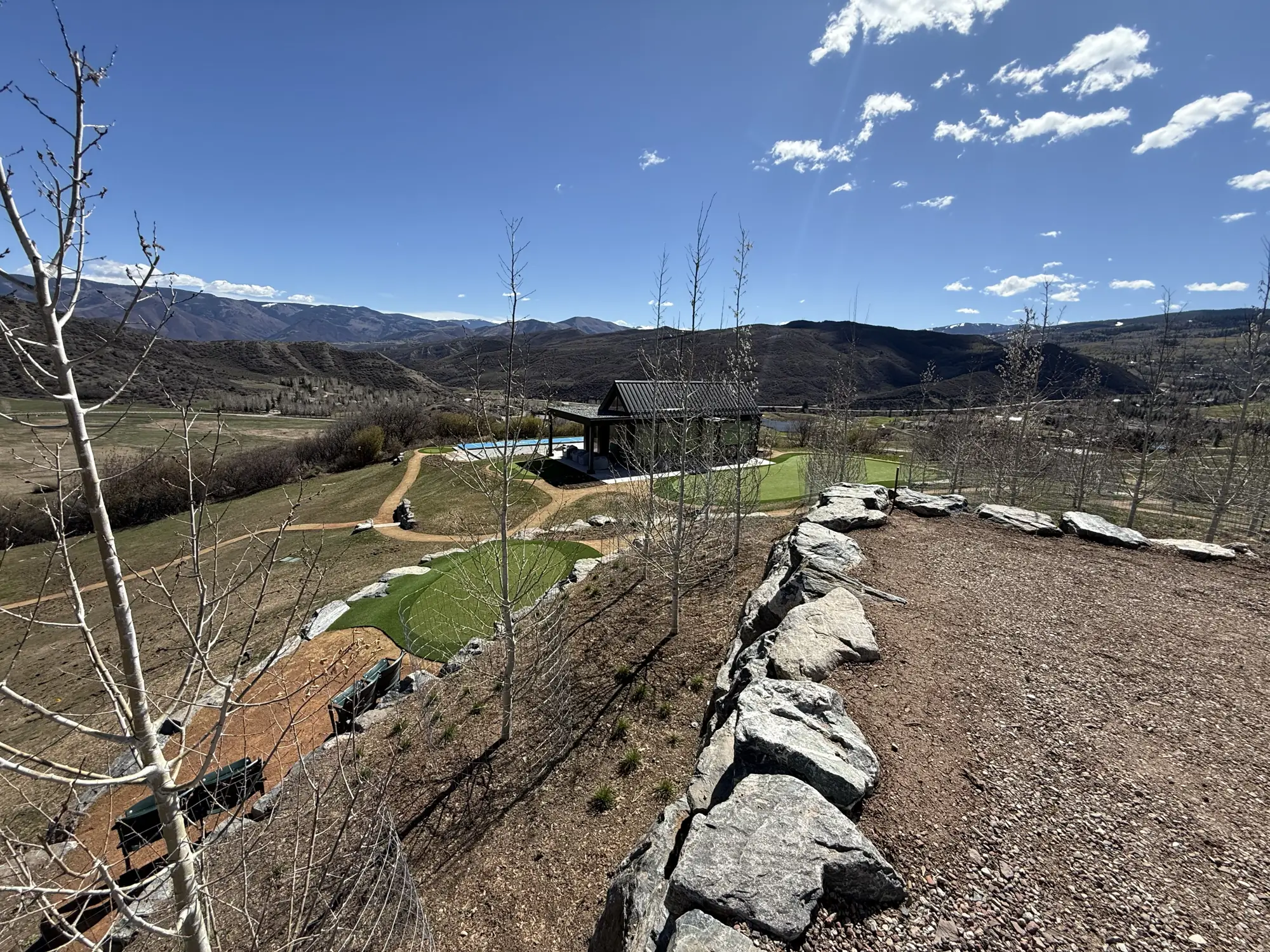
Start with the ground.
Tell us about the property and the scope. We'll review it and reach out about next steps.